

Core & Abdominal Strength
How long the trunk can work before it gives out. One event, either the timed curl-up set or a static hold.Curl-Ups · Plank
The test is back, and it is not the one you took in school. Six events across three categories, a student picks one from each, and scoring is against fixed benchmarks instead of percentiles. Here is the whole thing — what changed, who has to run it, the published standards, and how to get a class of thirty through it without losing a week.
The Presidential Fitness Test was retired in 2013. It was restored for the 2025-2026 school year by executive action, and the President's Council on Sports, Fitness & Nutrition published the official 2026 standards in May 2026.
The 2026 battery is organized into three fitness categories, with two event options in each. A student performs one event per category — three events in total, not six. That single design decision is the biggest practical difference from the test most adults remember, and it is why a class can get through the whole battery in a couple of periods.
Scoring is criterion-referenced. Each sex and each age from 6 through 17 and older has a fixed published number for every event. A student either reaches that number or does not; there is no percentile, no ranking against a national sample, and no way for one student's result to change another's.
How long the trunk can work before it gives out. One event, either the timed curl-up set or a static hold.Curl-Ups · Plank
Aerobic capacity. One event, either a measured mile outdoors or a paced 20-meter shuttle indoors.One Mile Run · 20m Beep Test
Pushing or pulling strength through a full range of motion. One event, scored as completed repetitions.Right-Angle Push-Ups · Pull-Ups
Three award tiers are named in the program: the Presidential Award, the National Award and the Participation Award. The Presidential Award is the one with published criteria — a student earns it by meeting the benchmark in all three categories.
If you are working from memory, from a laminated sheet in the equipment room, or from a district email that went out before the standards were published, some of what you think you know is wrong. Here is what the 2026 program actually contains.
| Element | Legacy test (1966-2013) | Published 2026 program |
|---|---|---|
| Flexibility | Sit-and-reach or V-sit reach | No flexibility event in the published 2026 battery |
| Agility | 30-foot shuttle run with wooden blocks | Not in the 2026 battery — the 20-meter beep test is a cardio event, not this |
| Scoring model | Percentile ranking against a national sample | Fixed benchmark numbers by sex and age — you meet the number or you do not |
| Event selection | Every student did every event | Pick one event per category — three events per student |
| Core event | Curl-ups or sit-ups only | Curl-ups for one minute, or a timed plank hold |
| Cardio event | One-mile run | One-mile run, or a 20-meter beep test as an indoor alternative |
This matters more than it sounds. A number of early state and district announcements described the legacy battery — sit-and-reach, agility shuttle run, percentile ranking — because that was the version everyone remembered when the restoration was announced. The standards published in May 2026 differ. If a memo in your inbox conflicts with the published materials, the published materials are the ones that govern.
The confusion that costs the most time is the shuttle run. The legacy event was a 30-foot agility sprint with wooden blocks and had nothing to do with cardio. The 20-meter beep test in the 2026 battery is a multistage endurance event and sits in the cardio category alongside the mile. They share a word and nothing else.
Short version: almost nobody is required to, and the list of exceptions is growing. Requirements are set at the federal-schools, state and district level, not by the standards themselves.
Schools run by the Department of Defense Education Activity are testing under the restored program. If you teach on a military installation, this is not optional and your command guidance governs the calendar.In detailDoDEA requirements
These states have issued adoption orders covering the 2026-27 school year. The order tells you that you are testing; your state department of education and your district decide the window, the reporting and who collects what.In detailVirginiaMississippiArkansas
In the rest of the country the program is opt-in. Plenty of schools are running it anyway because it gives PE a shared vocabulary and a clean before-and-after, but nobody is compelling you to.
California continues to operate the physical fitness testing program written into its own state law. If you teach there, that statutory program is what you are accountable to — the 2026 federal battery does not displace it.
Adoption is moving quickly enough that any list published today may be out of date next term. Before you commit a testing window to the calendar, confirm the current requirement with your state department of education and your district's PE coordinator — and get it in writing, because whether the results are reported upward changes how carefully you need to handle the data.
These are the published Presidential Award benchmarks for the 2026 Presidential Fitness Test, by age and by table. They are the numbers a student has to reach in each of their three chosen events.
Pick an age and a table and you get that row's six published numbers as cards — easier than reading across a wide table on a phone at the station.
Showing the Boys table, age 10.
Curl-Ups
at least 45
Plank
at least 119s
One Mile Run
7:57 or faster
20m Beep Test
at least 55 laps
Right-Angle Push-Ups
at least 22
Pull-Ups
at least 6
Everything here runs on this page — nothing you select is sent or stored.
| Age | Core & Abdominal Strength | Cardiorespiratory Fitness | Upper Body Strength | |||
|---|---|---|---|---|---|---|
| Curl-UpsMinimum reps | PlankMinimum hold | One Mile RunMaximum time | 20m Beep TestMinimum laps | Right-Angle Push-UpsMinimum reps | Pull-UpsMinimum reps | |
| 6 | 33 | 73s | 10:15 | 27 laps | 9 | 2 |
| 7 | 36 | 90s | 9:22 | 32 laps | 14 | 4 |
| 8 | 40 | 95s | 8:48 | 39 laps | 17 | 5 |
| 9 | 41 | 109s | 8:31 | 47 laps | 18 | 5 |
| 10 | 45 | 119s | 7:57 | 55 laps | 22 | 6 |
| 11 | 47 | 119s | 7:32 | 60 laps | 27 | 6 |
| 12 | 50 | 127s | 7:11 | 65 laps | 31 | 7 |
| 13 | 53 | 134s | 6:50 | 70 laps | 39 | 7 |
| 14 | 56 | 134s | 6:26 | 75 laps | 40 | 10 |
| 15 | 57 | 156s | 6:20 | 81 laps | 42 | 11 |
| 16 | 57 | 156s | 6:08 | 84 laps | 44 | 11 |
| 17+ | 57 | 156s | 6:06 | 84 laps | 53 | 13 |
Published Presidential Award benchmarks for the 2026 Presidential Fitness Test, digitized from the standards released by the President's Council on Sports, Fitness & Nutrition in May 2026. Always confirm against the official materials: whitehouse.gov/fitness
The standards say nothing about how to fit this into a school day. That part is yours, and it is where testing usually goes wrong — not in the protocols, but in trying to score thirty students on three events in forty-five minutes.
The pattern most PE departments settle on is a fall pre-test in the first few weeks and a spring post-test near the end of the year, with the same three events both times. One test in isolation tells a student almost nothing; two tests tell them whether the work in between moved anything.
A class of 25 to 30 students will not get through three scored events in a single period if you run them one at a time. Assume one period for the core and upper body events run as parallel stations, and a separate day for the cardio event.
Three stations of eight to ten students, each with a scorer and a partner counting, keeps everyone moving and cuts standing-around time. Partner counting also doubles as teaching: the student watching learns the form standard faster than the student performing.
Give the class at least one unscored attempt at each event. First attempts almost always fail on form or pacing rather than fitness, and a student who bombs a scored plank because nobody told them where their elbows go learns the wrong lesson.
Five to ten minutes of general movement and dynamic work before scoring, and an easy cool-down after the cardio event. Testing a cold class produces worse numbers and more strains, which is the opposite of the point.
If the mile is your cardio event, decide in advance what happens when the field is unusable. The beep test exists partly for this reason — it runs indoors in a 20-meter lane and needs nothing but a speaker and a measured floor.
One more scheduling note: keep the same event choices between the pre-test and the post-test. A student who planks in September and does curl-ups in May has two results that cannot be compared, which throws away most of the value of testing twice.
If you would rather not be the pacer and the scribe at the same time, Jaguar Athletics conducts the beep-test cadence and the core timers from the phone — you tap students out and coach the station. See how the app runs a station
Six events, three of which any one student performs. The summaries below cover the standard administration for each; confirm exact wording against the official materials before you score, and above all apply whatever you decide identically to every student.
Core and abdominal endurance
The student lies on their back with knees bent and feet flat, arms at their sides. They curl up until the shoulder blades leave the mat, then return until the shoulders touch again. Score the number of complete repetitions in one minute.
In practice
Call a steady cadence out loud so the whole station moves together — a student sprinting the first fifteen seconds burns out and scores lower than one who paces. Reps that do not return all the way down do not count, and it is kinder to say so on the practice day than on the scored one.
Core and abdominal endurance
The student holds a forearm plank: elbows under the shoulders, forearms flat, body in a straight line from head to heels. Score the hold in whole seconds and stop the clock when form breaks and is not corrected after one warning.
In practice
Agree on what counts as a break before you start — hips sagging or riding up is the usual one — and apply it identically to every student. Position the timer where they cannot watch the count, because a visible clock turns the event into a staring contest.
Cardiorespiratory fitness
The student covers one mile on a measured course as fast as they can, walking allowed. Score the finishing time in minutes and seconds — lower is better, and this is the only event where that is true.
In practice
Measure the course properly: four laps of a standard 400-meter track is 1,600 meters, about nine meters short of a mile, so start the mile nine meters back from the finish line rather than calling four laps a mile. Teach pacing beforehand, and use a lap counter or a partner tally so nobody argues about laps at the finish.
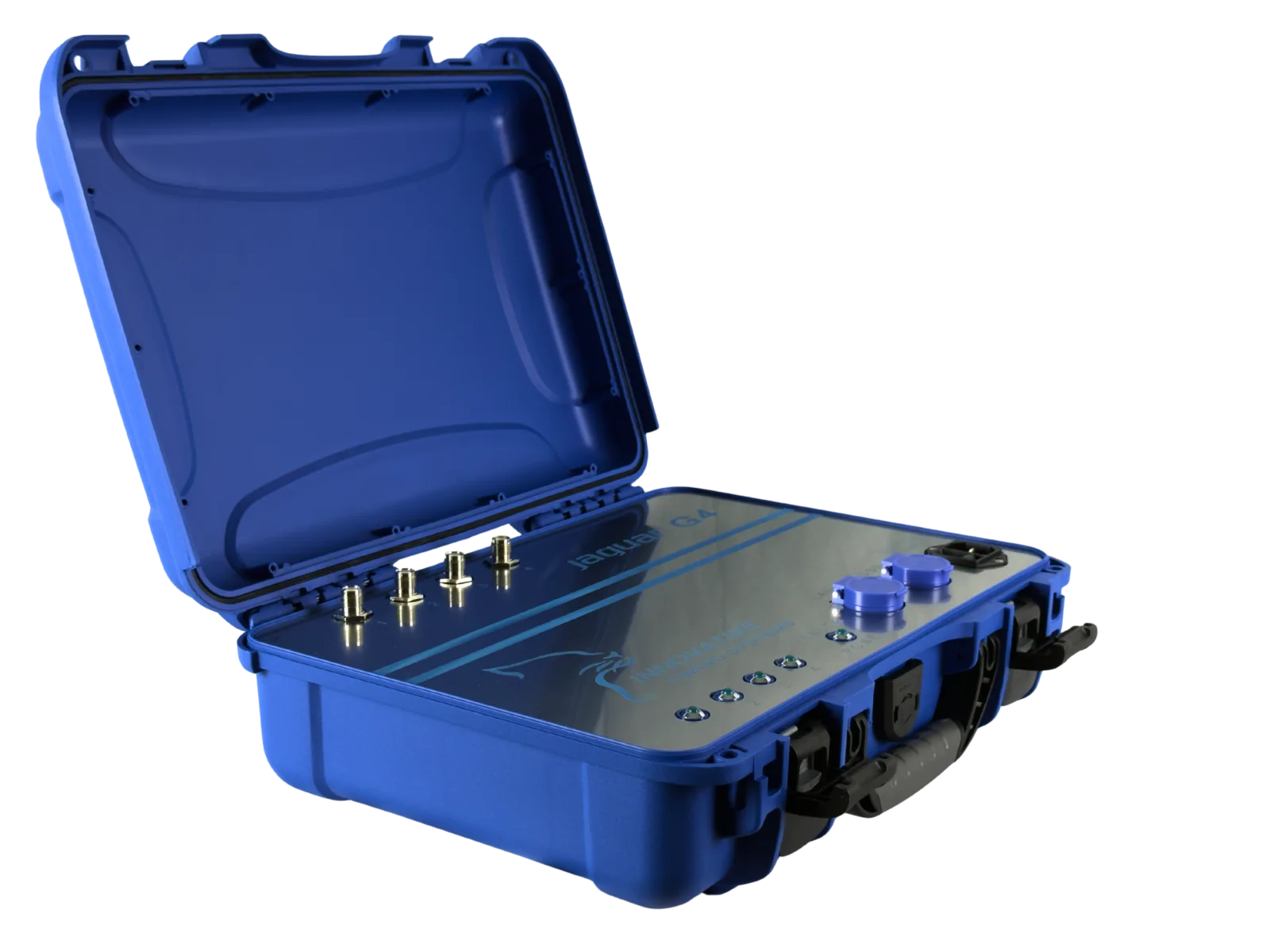
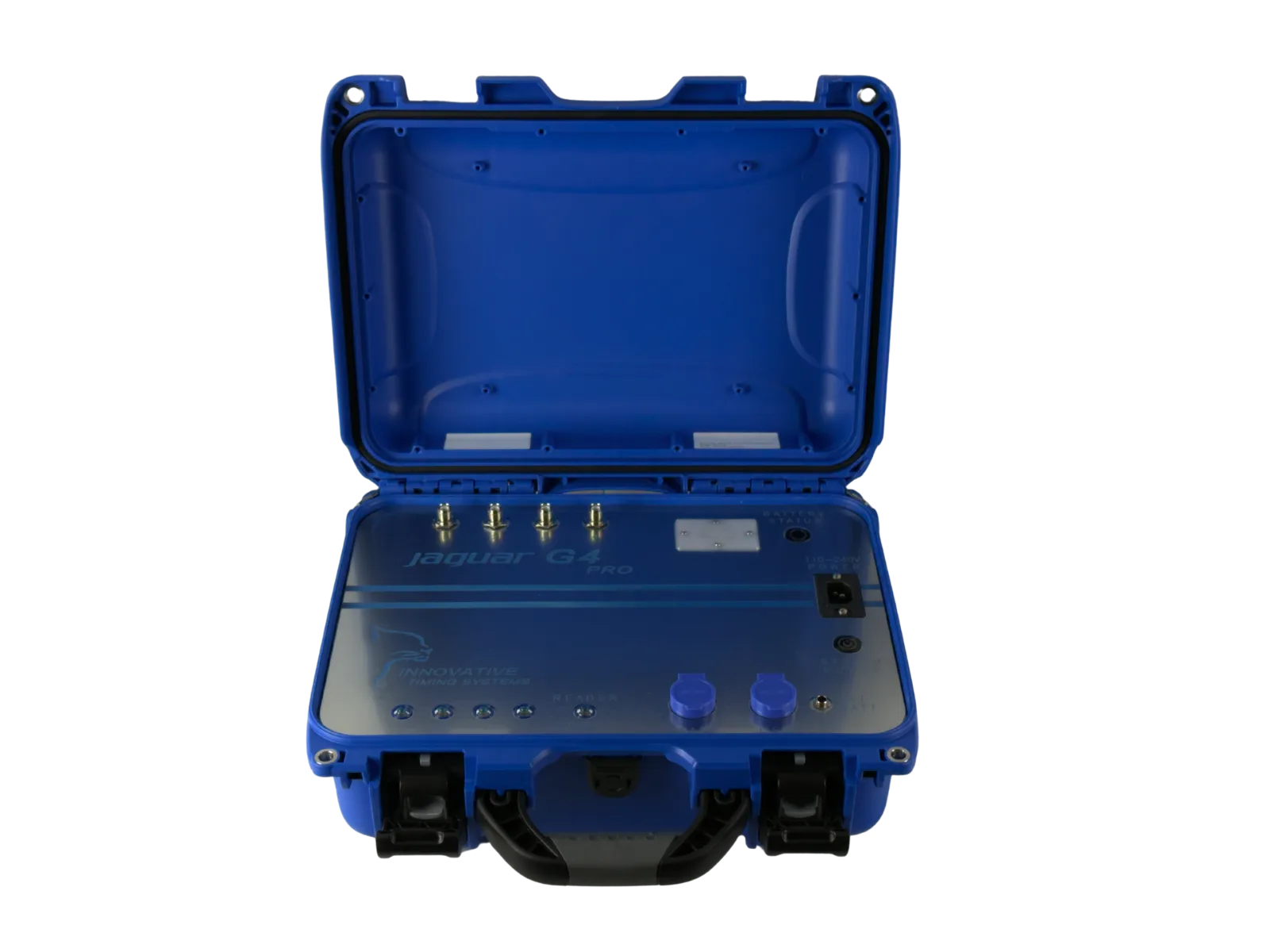
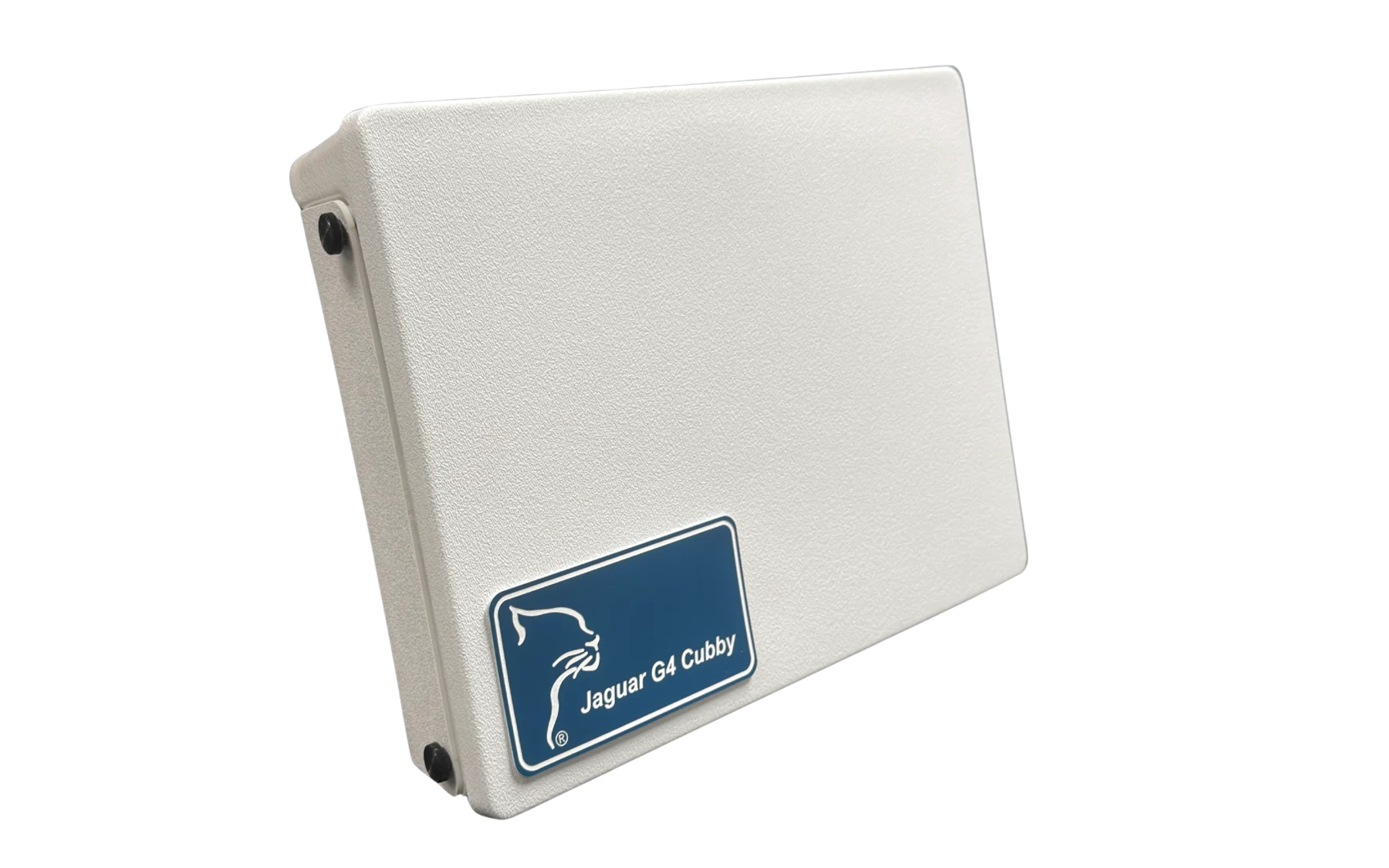
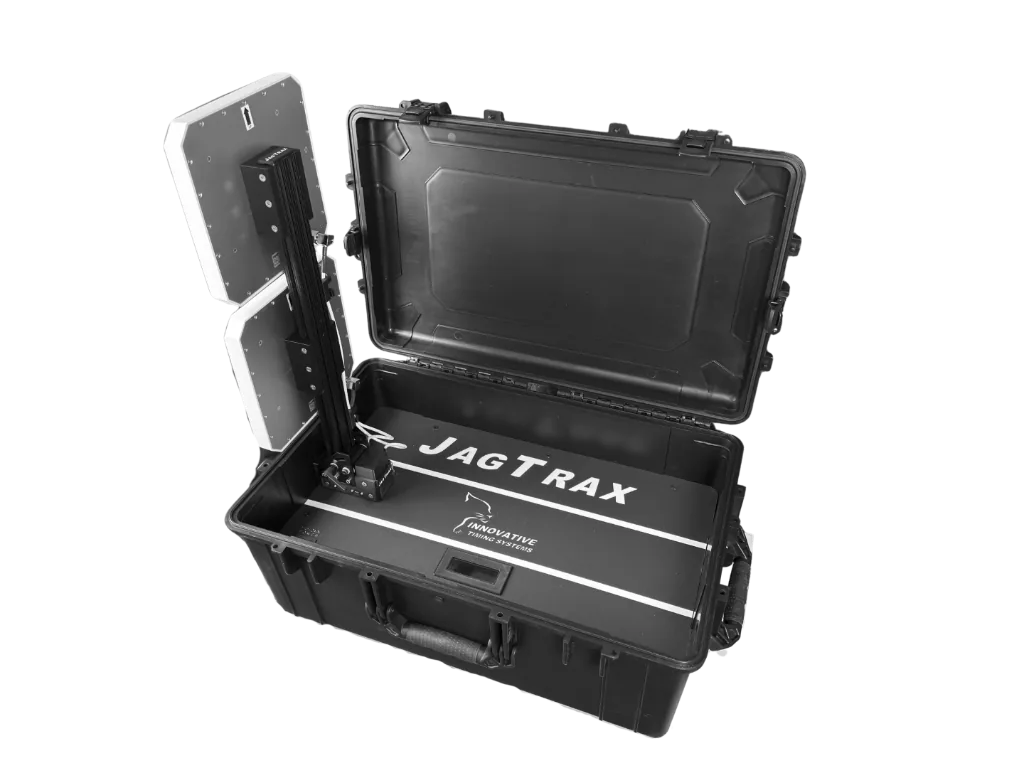
JagTrax is the hardware that times the mile automatically if you would rather not click a stopwatch for every finish.
Cardiorespiratory fitness
Two lines are marked 20 meters apart. Students run from one line to the other in time with an audio cadence that gets faster stage by stage, and drop out when they can no longer reach the line in time. Score the number of completed laps.
In practice
The 20-meter distance and the fact that the cadence accelerates are the fixed parts; the exact audio track, the number of warnings before a student is out and the stage structure vary between published versions. Pick one recording and one drop-out rule, write them down, and use the same ones every time you test — otherwise your fall and spring numbers are not comparable.
Upper body strength and endurance
From a push-up position with a straight body line, the student lowers until the elbows reach roughly a right angle, then pushes back to full extension. Score the number of complete repetitions.
In practice
The right angle is the whole point of the event and it is the thing students shortcut first. Have the partner watch from the side, not from above, and let them call short reps. A cadence keeps the pace honest and stops the fast-and-shallow strategy.
Upper body strength
From a hang on an overhead bar, the student pulls up until the chin clears the bar, then lowers to a full hang. Score the number of complete repetitions. There is no time limit; the set ends when the student can no longer complete a repetition.
In practice
Check bar height and have a spotter for the mount and dismount. Kipping and swinging make the count unreliable — a partner's hand lightly on the shins stops the swing without assisting the pull. Students who cannot yet do one repetition are usually better served choosing push-ups.
The President's Council publishes the program materials — the standards, a printable score sheet and the award certificate artwork — on its fitness page. Download them from the source rather than from a copy circulating in a staff drive, because the version that matters is the current one.
What the score sheet does not solve is everything after the clipboard. Raw numbers come off paper rosters at three different stations, get typed into a spreadsheet, and then every single row has to be checked against the right benchmark for that student's age and table — a lookup you repeat once per student per event. For a department testing several hundred students twice a year, that is the real cost of the program, and it is where transcription errors get in.
The standards table, the printable score sheet and the three award certificates are published together on the government's fitness page. Start there: whitehouse.gov/fitness
One way to run test day
Jaguar Athletics — the Presidential Fitness Test feature in the ITS app — runs the events themselves. It conducts the 20-meter beep test end to end, playing the recorded instructions, the accelerating cadence and the level announcements while you tap students out. It runs the one-minute curl-up bout and the plank holds on built-in timers, then the benchmark comparison and certificates come out the other side. You supervise and coach; the app is the pacer, the timer and the scribe.
To be exact about it: the beep test is conducted by audio, not counted by chip — the mile is the only event timed by hardware.
See how Jaguar Athletics runs test dayFitness testing has a long history of being the worst day of the year for the students who need PE the most. None of that is required by the standards, and most of it is avoidable with four decisions made before you start.
No reading times off a clipboard to the class, no leaderboard on the gym wall with names on it, no shouting a plank time across the field. A student's fitness result is their business and their family's. If you want a public number, post a class or grade-level total that nobody can be identified from.
Grade participation, effort, technique and knowledge. A student cannot choose their body, their growth timing or their starting point, and attaching a letter grade to a benchmark punishes them for it. Most state PE standards say this explicitly — check yours.
The useful comparison is a student against their own fall number, not against the benchmark or against each other. Setting a personal target between the pre-test and the post-test gives a student below the standard something to win, which the benchmark alone never does.
Collect what you need to score the test and nothing more, keep it somewhere access-controlled rather than a shared drive or a personal spreadsheet, and delete it on your district's retention schedule. Fitness results attached to a named student are education records — treat them the way you would treat grades.
Families ask what the test is, whether it is graded and what happens to the results. A one-page letter sent before the testing window answers all three and prevents most of the awkward conversations afterwards. Free, editable, and written in both languages.
Three tiers are named in the program, and the artwork for each is published by the government alongside the standards. What you print, and for whom, is a decision your school gets to make.
Earned by meeting the published benchmark in all three categories — core, cardio and upper body. This is the only tier whose criteria appear in the published standards table.
A recognition tier below the Presidential Award. Exact qualifying criteria have not been published in the standards table, so if you plan to award it, define your school's rule in writing and revisit it when administration guidance is released.
Recognizes students who took part in the testing. It is the tier that matters most for the students furthest from the benchmarks, and the easiest one to hand out generously.
Certificates are normally produced the obvious way: download the official artwork, fill in the student's name and the date, and print. For a class that is ten minutes of work. For a department of several hundred students it is an afternoon, which is why most schools end up building a mail-merge from the same spreadsheet they used for scoring. whitehouse.gov/fitness
Jaguar Athletics finishes this end of the day the same way it runs the events: each student's certificate generates itself as soon as their three events are done, so there is no mail-merge to build. Jaguar Athletics
The single most searched question about the 2026 program has an uncomfortable answer: there is no published National Award standards table. Here is exactly what the May 2026 standards do and do not define.
The standards the President's Council released in May 2026 define one set of numbers: the Presidential Award benchmarks, for each sex and each age from 6 through 17 and older, across all six events. That table is the whole of the published numeric standard, and it is the table reproduced on this page.
The National Award and the Participation Award are named in the published program materials, and certificate artwork exists for both. What does not exist, as of August 2026, is an official table of qualifying scores for either one. Nothing in the released standards states a score, a percentage, a percentile or a number of categories that earns a National Award.
So treat any specific National Award cut-off you find online as unofficial. The figures circulating in PE forums, on lesson-plan sites and in AI answers are generally inferred from the legacy 1966-2013 program, which ranked students on percentiles that the 2026 program does not use at all. They are not the current standard and they did not come from the Council.
If your school wants to award a National tier this year, the honest way to do it is to decide your own rule, write it down, and say plainly on the certificate and to families that it is a school rule rather than a federal standard. Whatever you choose, apply it identically to every student and keep a note of it, because you will want to compare this year against next.
The questions PE teachers actually send us about the 2026 program.
Not for schools generally. Testing is required in Department of Defense Education Activity (DoDEA) schools, and Virginia, Mississippi and Arkansas have issued state adoption orders for the 2026-27 school year. Everywhere else participation is voluntary and decided by the state, district or school, and California continues to run its own statutory physical fitness testing program. Requirements are still changing, so confirm your own state and district guidance before you build a testing calendar.
Nothing replaced them — they are simply not in the 2026 battery. The published 2026 standards cover six events across three categories: curl-ups or a plank for core strength, a one-mile run or a 20-meter beep test for cardiorespiratory fitness, and right-angle push-ups or pull-ups for upper body strength. There is no flexibility event and no agility shuttle run. Do not confuse the old 30-foot agility shuttle run with the 20-meter beep test, which is a cardio event and is part of the 2026 battery.
Fixed benchmarks. The 2026 standards are criterion-referenced: each sex and age from 6 through 17 and older has a published number for every event, and a student either meets it or does not. Students are no longer ranked against a percentile of a national sample, so two students of the same age can both meet the standard without competing against each other.
The benchmark row for the student's age at the time of testing, not their grade level. The published table runs from age 6 to a single row for age 17 and older. Because the numbers step up year to year, a student who tests in the fall and again in the spring may move to a new row in between — record the age you scored against alongside the result so the comparison stays honest.
The President's Council publishes the program materials — the standards, the printable score sheet and the award certificate artwork — at whitehouse.gov/fitness. Download them from that page directly so you always have the current version rather than a copy circulating in a staff drive.
Yes. The 2026 battery is pick-one-per-category: one core event, one cardio event and one upper body event, for three events in total. A student may hold a plank instead of doing curl-ups, or run the beep test instead of the mile. Many teachers let the class choose, then keep the choice consistent between a fall pre-test and a spring post-test so progress is comparable.
Both measure cardiorespiratory fitness and both count for the same category — a student does one or the other. The one-mile run is scored as a time, so a lower number is better, and it needs a measured outdoor course. The 20-meter beep test is scored as a number of completed laps between two lines 20 meters apart, paced by an audio cadence that gets faster as it goes, so a higher number is better and it fits inside a gym. Schools with no track, or with weather problems, usually run the beep test.
Plan on more than one class period for a typical class of 25 to 30 students. The core and upper body events run well as parallel stations and often fit in a single period once students know the protocol; the mile run or beep test usually deserves its own day, plus a warm-up and a practice attempt beforehand. Budget a separate practice day before anything is scored — first attempts are almost always form problems rather than fitness results.
The program names three: the Presidential Award, the National Award and the Participation Award. The Presidential Award is earned by meeting the published benchmark in all three categories. The government has published the Presidential benchmark table; specific criteria for the other two tiers have not been published in the same table, so treat any exact National Award cut-off you find online as unofficial until administration guidance is released.
There is no published National Award standards table. The standards released in May 2026 define one set of numbers — the Presidential Award benchmarks — for each sex and each age from 6 through 17 and older. The National Award and the Participation Award are named in the published materials and have their own certificate artwork, but no official qualifying score, percentage or category count has been published for either one. Any specific National Award cut-off circulating online is unofficial, and most of it is carried over from the percentile-based 1966-2013 program, which the 2026 program does not use. If your school wants to award a National tier this year, write your own rule down and say plainly that it is a school rule. We will update this guide when the President's Council publishes administration guidance.
No. This is an independent guide written by Innovative Timing Systems, a sports timing company. We are not affiliated with, endorsed by or acting on behalf of the President's Council on Sports, Fitness & Nutrition or any government agency. The official standards, score sheet and certificates come from whitehouse.gov/fitness — always treat that page as the authority.
Have a question this guide does not answer? Send it to us and we will add it — this page is maintained as the program's guidance evolves.
Jaguar Athletics is the Presidential Fitness Test feature in the ITS app, and it administers the battery rather than just holding the results: it conducts the 20-meter beep test with recorded instructions and accelerating cadence audio, times the curl-up bout and the plank holds, judges every result against the published 2026 table, and produces the certificates. Pair it with JagTrax and the mile times itself too. You coach; it paces, times and scores.
Independent guide by Innovative Timing Systems. Not affiliated with or endorsed by any government agency.